

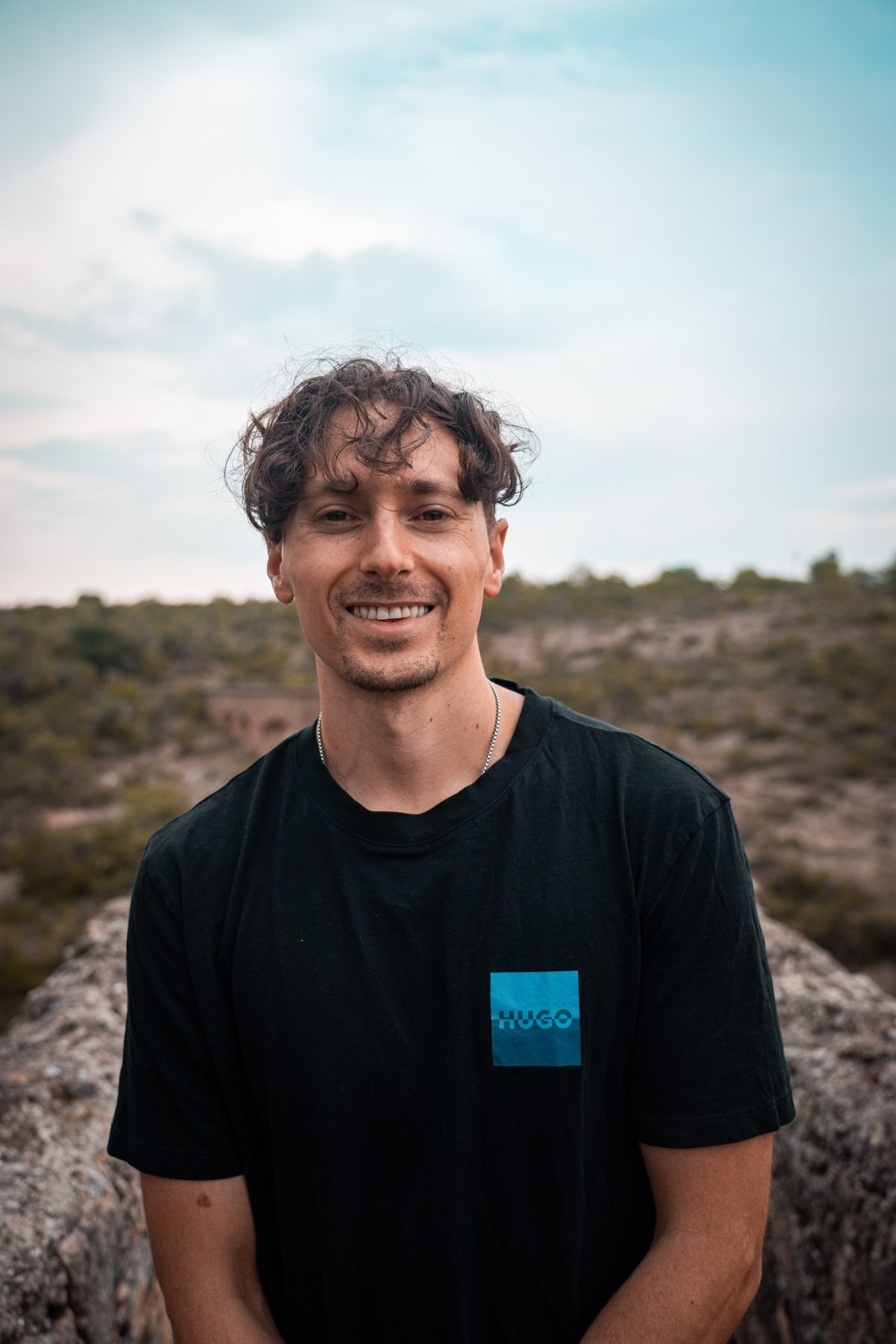
Six and a half years ago, on February 1, 2020, I had my last drink.
It wasn’t a rock bottom moment. There was no intervention, no wakeup call in the traditional sense. I hadn’t destroyed relationships or lost a job because of alcohol. By most measures, I had it together.
But I knew something had to change.
I had just driven across the country to start a new job in Raleigh, North Carolina. That first night, I had one beer. Nothing wild. I wasn’t drunk. But as I was walking back to where I was staying, I noticed my voice starting to go.
Years earlier, I’d had two separate bouts of laryngitis so severe I couldn’t speak for two to four weeks. It had left a mark on me. So when I felt my voice changing that night, something shifted.
As I noticed my voice changing, I had this incredibly clear moment with God. The message was simple: “You don’t need to be drinking.” It wasn’t dramatic. It wasn’t loud. It was just undeniable. I said out loud, “I hear you. I’m done.”
That was the last night I associated myself with alcohol. After that evening, it was no longer a part of my life.
Not because alcohol had destroyed my life. But because I knew, in that moment, it no longer belonged in the life I was trying to build.
The Part Nobody Warns You About
A month after I quit, COVID hit. The world shut down. Everyone was coping however they could, and for most people that meant drinking more. Part of me thought it would have been easy to slip back in. You know, relax, pour a glass, let the isolation feel a little softer…
I didn’t. And looking back, that decision compounded into everything that came after.
But before COVID erased the social calendar, there were uncomfortable moments.
The one that stands out most: I was living in Colombia, on a date with a woman I really liked. She loved wine and kept encouraging me to join her. I said no. She asked again. And again throughout the evening.
I remember sitting there thinking: why do I have to keep defending a healthy boundary?
For me, it became a red flag. Not about her specifically, but about what I was willing to accept. Quitting alcohol taught me early that some people are uncomfortable when you don’t drink, because it holds up a mirror they’re not ready to look into. That’s not your problem to solve.
There were work events where I felt slightly outside the circle. Moments where the bonding happened around a drink I wasn’t having. Most people were respectful. Some weren’t. But I had spent the previous year drinking very little, building a stronger spiritual practice and cultivating my energy. Those foundations made the transition easier than it might have been.
What Actually Changed
The biggest shift wasn’t what I expected.
It wasn’t dramatic. It wasn’t a sudden glow-up or a personality transformation. It was something quieter and more powerful: consistency.
I stopped losing days.
Before, there’d be a Friday night out, a Saturday morning written off, a Sunday spent catching up. That cycle was costing me more than I realized. Not just hours, but momentum. Mental clarity. Follow-through.
When I stopped drinking, I stopped recovering and started creating.
The goals I set for myself actually got done. The practices I wanted to build — meditation, movement, writing, photography — had room to take root. One intentional choice made it easier to make the next one. And the next one. Over six years, that compounded into almost every area of my life.
The Social Life I Found Instead
I didn’t become a hermit. I just started showing up in different rooms.
Instead of bars, I found myself at Latin dance socials, ecstatic dances, men’s groups, and retreats. Spaces where alcohol wasn’t the point and connection was. The focus shifted from drinking together to actually being together.
I made deeper friendships in those spaces than I ever had at a happy hour. I expressed myself more freely. I danced more. I laughed more. I realized how much fun life could be when you’re fully present in it instead of taking the edge off.
On Still Having Wine Sometimes
I want to be honest about this, because I think it matters.
On very rare occasions, an exceptionally meaningful family celebration or a once-in-a-lifetime moment, I give myself the freedom to have a small glass of wine. Consciously. Intentionally.
For me, sobriety was never about restriction. It was about freedom. The freedom to be fully present. The freedom to choose what belongs in my life and what doesn’t.
I’ve never felt addicted to alcohol. College was a different story. Drinking four nights a week was completely normalized, and looking back, it was binge drinking. But after that chapter, I never needed alcohol to fit in or have fun.
Today, I know I don’t need it. That’s what gives me the freedom to occasionally choose it, consciously, rather than having the moment choose for me.
What Six and a Half Years Taught Me
The question I heard most often when I stopped drinking was simple: “Why?”
It makes sense. People like certainty. If they’ve always known you as someone who drinks socially, your decision will surprise them. I learned quickly that I had two options — tell the whole story, from learning I had acid reflux to giving up hard liquor in 2019 to the conversation with God in Raleigh — or simply say: “It’s better for my health.” “It’s no longer important to me.” Those answers are enough. Your personal decisions don’t require other people’s approval. The people who respect you won’t need a lengthy explanation.
What surprised me most was how the discipline rippled outward. When you make a decision that isn’t always easy and keep honoring it day after day, you start building trust with yourself. You prove that you can follow through. That confidence doesn’t stay limited to alcohol. It carried into my career, my relationships, my health. It gave me the confidence to become a coach, to learn bachata, to pursue goals that once felt out of reach. Every promise you keep to yourself becomes evidence that you’re capable of more than you thought.
I also found communities I never knew existed. In Tulum, I attended alcohol-free gatherings, ecstatic dances, and a New Year’s Eve celebration built around music, movement, and real connection. I found the same energy in Latin dance communities, men’s groups, breathwork events, sauna events, and outdoor group adventures. The goal in all of those spaces wasn’t getting intoxicated; it was feeling more alive. The more you explore, the more you realize meaningful connection has never depended on alcohol.
And the hangovers. Nobody talks about this enough. You wake up with more energy, clarity, and your weekends intact. Instead of spending one or two days recovering, you’re free to train, create, spend time with people you love, or simply enjoy your life. That consistency compounds over time. Looking back, the greatest gift wasn’t giving something up — it was getting my time, energy, and attention back.
Six and a half years in, I can say with certainty: this was one of the best decisions I’ve ever made.
Not because alcohol was destroying me. But because removing it created space. For clarity, for discipline, for presence, for the life I actually wanted to build.
One ripple at a time.
Ready to take the next step?
If any part of this story resonates — maybe you are at a crossroads and know there is a change you would like to make but are still on the fence — the Free Life Assessment is a good place to start. It’s ten questions, takes five minutes, and you get a personalized report on where you are and what’s getting in the way.
Take the Free Assessment